
- Lower operating costs: Solar offsets daytime electricity consumption, meaning your genset runs less frequently, saving fuel and maintenance costs
- Predictable energy expenses: Lock in solar energy production to reduce dependence on fluctuating grid tariffs.
- Maximized return on assets: Your existing genset continues to provide backup, extending its lifespan by reducing operational hours.
- Enhanced energy efficiency: Intelligent load management between solar and genset ensures you only use energy when you need it.
Over 10–20 years, the combined savings on electricity and fuel can make hybrid power more cost-effective than relying solely on generators or the grid.
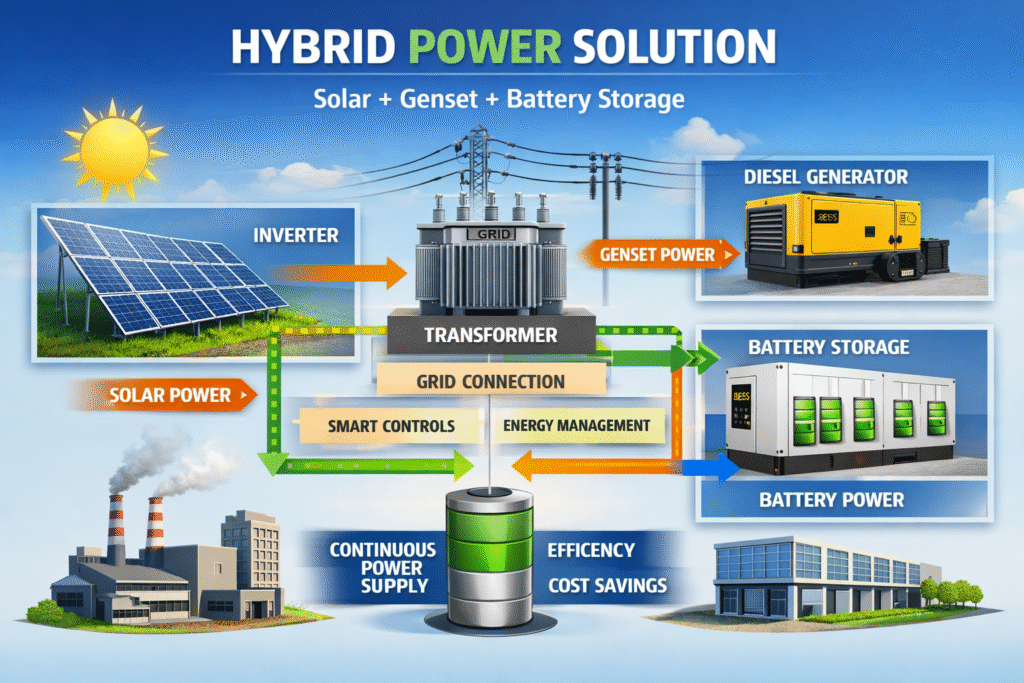
How It Works
A typical hybrid system involves:
- Solar panels capturing energy during the day.
- Battery storage (optional) storing excess energy for night use or peak shaving.
- Genset integration automatically supplementing energy when solar production is insufficient.
- Smart load management to prioritize renewable energy while keeping backup reliable.
This setup ensures continuous operation, even during outages, while reducing your carbon footprint.
Why Businesses Should Consider Hybrid Power
- Industrial facilities: Maintain uninterrupted manufacturing operations without over-reliance on costly fuel.
- Commercial buildings: Reduce electricity bills while ensuring critical systems stay online.
- Healthcare and data centers: Guarantee backup power without compromising sustainability goals.
Getting Started
- Assess your energy needs: Identify load profiles, peak demand, and critical systems.
- Choose the right solar-genset combination: Size solar panels and battery storage for optimal savings.
- Integrate smart controls: Ensure seamless switching between solar and genset.
- Track performance: Monitor fuel savings, solar generation, and system uptime.
Businesses that adopt hybrid power today are not just saving money—they’re building resilient, future-ready energy systems.
