
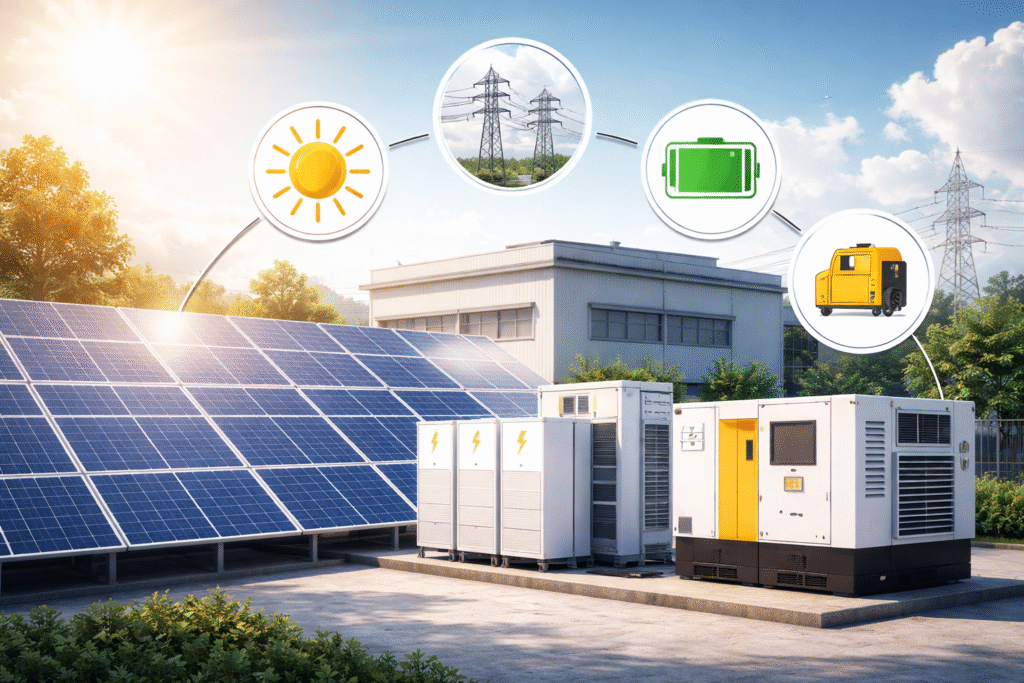
Solar Power Systems 2026 – Prices, Hybrid Solutions & Installers in India
What Is a Solar Power System in a Hybrid Energy Setup? (Solar + Battery + Grid)
A solar power system is a clean energy solution that converts sunlight into electricity using solar PV panels and inverters. In a hybrid power system, solar acts as the primary energy source, reducing dependence on grid power, diesel generators, and batteries.
Unlike standalone solar, a hybrid-ready solar system is designed to work seamlessly with:
•Grid supply
•Battery energy storage (BESS)
•Backup power sources (when required)
The result is lower energy cost, higher reliability, and smarter energy management.
How Solar Strengthens Hybrid Power Systems (Technical & Cost Benefits)
In modern hybrid energy systems, solar does the heavy lifting.
Key roles of solar in a hybrid setup:
•Supplies daytime power directly to loads
•Reduces grid import and peak demand charges
•Charges batteries efficiently using clean energy
•Minimises runtime of backup power sources
•Stabilises energy costs against fuel and tariff hikes
Solar ensures that hybrid systems are economically viable, not just reliable.
Core Components of a Solar Solution (Hybrid-Ready)
A hybrid solar system includes carefully selected components designed for integration and performance.
Solar PV Modules
•Convert sunlight into DC electricity
•Monocrystalline modules preferred for higher efficiency
•Rooftop, ground-mounted, or carport installations
•Designed for 25+ years of operation
Solar Inverters (Hybrid / Grid-Interactive)
•Convert DC power to AC
•Manage energy flow between solar, grid, and batteries
•Support load prioritisation and peak shaving
•Enable seamless switching without power interruption
DC & AC Protection Systems
•DC combiner boxes
•Surge protection devices (SPD)
•AC distribution panels
•Earthing and lightning protection
Energy Monitoring & Control
Real-time generation and consumption tracking
Remote monitoring dashboards
Fault detection and performance alerts
Data integration with energy management systems (EMS)
Technical Advantages of Solar in Hybrid Power Systems
Solar is not just an energy source—it is a control element in hybrid systems.
Technical benefits:
•Zero fuel dependency
•No warm-up or start delay
•Instant response to load changes
•Excellent compatibility with battery storage
•Scalable capacity for future expansion
•Predictable long-term energy output
Solar enables smart energy dispatch, ensuring other power sources operate only when necessary.
Why Solar Is the Backbone of Hybrid Power in 2026
As energy costs rise and sustainability becomes mandatory, solar is no longer optional.
Businesses adopt solar because it:
•Cuts electricity bills significantly
•Reduces carbon footprint
•Improves energy independence
•Protects against grid instability
•Enhances ROI of battery storage systems
•Supports ESG and regulatory compliance
In hybrid systems, solar defines operating cost, while other sources provide backup.
Typical Hybrid Configuration with Solar at the Core
Solar PV + Hybrid Inverter + Grid + Battery (Optional)
Role of solar in this configuration:
•Powers loads during daylight hours
•Charges batteries for evening and outage use
•Reduces grid dependency during peak tariffs
•Enables silent, emission-free operation
•Improves overall system efficiency
Solar ensures the hybrid system runs clean first, backup later.
How to Design the Right Solar Solution for Hybrid Use
A poorly designed solar system limits the benefits of hybrid power.
Key design considerations:
Daily energy consumption (kWh)
Daytime vs night-time load profile
Roof area and shadow analysis
Inverter capacity and hybrid compatibility
Battery charging strategy (if applicable)
Grid export / net-metering rules
Future load growth planning
Correct solar sizing directly impacts cost savings and system reliability.
Solar + Battery: A Perfect Hybrid Combination
Solar charges batteries at the lowest possible energy cost.For long-duration backup and critical loads, solar systems are often integrated with genset in hybrid power solutions
Benefits of solar-charged batteries:
•Reduced grid charging cost
•Longer battery life due to controlled charging
•Silent backup during outages
Improved return on battery investment
Without solar, battery systems are expensive and inefficient.
Solar Power System Cost in India (Hybrid-Ready)
Rooftop solar: ₹45,000–65,000 per kW
Hybrid solar (solar + battery): project-based
Industrial hybrid systems: depends on load profile
Cost Efficiency of Solar in Hybrid Systems (India – Indicative)
Solar offers the lowest cost per unit of electricity over its lifetime.
•Typical solar generation cost: ₹2–3 per unit
•System lifespan: 25+ years
•Minimal maintenance
•No fuel price risk
Solar significantly improves the payback period of hybrid power systems.
Solar Is Not an Add-On—It Is the Foundation
In modern hybrid energy systems, solar is the primary energy engine.
When designed correctly, a solar solution:
•Maximises renewable usage
•Minimises operating cost
•Enhances system reliability
•Future-proofs your power infrastructure
Solar doesn’t just support hybrid power systems—
it empowers them.
Planning to Install a Solar or Hybrid Power System?
Choosing the right solar capacity, inverter type, and hybrid configuration directly impacts long-term savings and reliability.
Whether you need:
• Rooftop solar for industry
• Solar + battery backup
• Solar integrated with genset and grid
Get your load assessed and compare hybrid solar solutions before finalising a vendor
